
This job did not start as a 250°C design study. It started as three wheel sizes, a covered reorder, and a cover thick enough to cut the pull almost in half. The welding temperature came later.
We are writing it up without naming the customer. The engineering path is what matters.
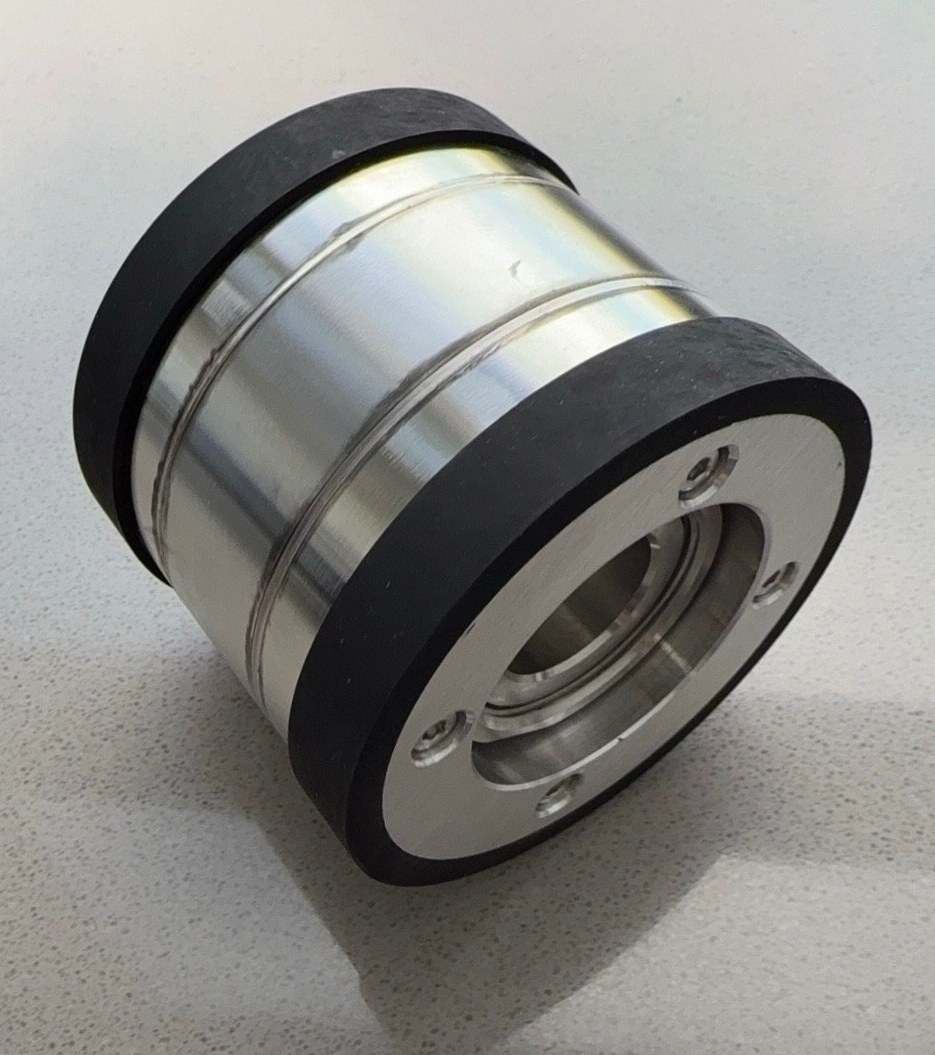
The photographed unit is the covered assembly from this project (no stock part number): overall diameter 85 mm, width 70 mm, black high-temperature polyurethane rings on the outer diameter, two 12.5 mm rubber wheel hubs left and right. Designed for 150°C with vertical pull greater than 300 N.
First build: three sizes, clear acceptance pulls
The first RFQ asked for three magnetic wheels: a standard TY-W-80, plus covered customs in the TY-W-50R and TY-W-80R sizes. Parts went out against these acceptance figures:
| Configuration | Acceptance pull (kg) | Notes |
|---|---|---|
| TY-W-80 | >60 | Standard (no cover) |
| TY-W-50R | >10 | Covered custom |
| TY-W-80R | >30 | Covered custom |
Pull figures here are the job’s acceptance numbers in kg. Test basis for the orientation values on this project: room temperature, 10 mm polished S235JR plate (DIN 10025). Under normal test conditions the measured force is not lower than the specified value and is usually higher. Installation, temperature, and the counterface can change the result a lot — treat the numbers as orientation. Conversion used here: 1 kg ≈ 10 N.
Vertical pull test on a steel plate (same class of orientation test as the acceptance figures above). The photographed 85×70 mm covered unit on this project measured 40.5 kg vertical (~405 N at 1 kg ≈ 10 N).
The covered reorder: 5 mm of coating, UH, 150°C
Months later the same robot program came back for a covered TY-W-80R batch. Against the bare standard wheel, the covered build carried four constraints:
- 5 mm high-temperature polyurethane cover on the outer diameter
- Acceptance pull still >30 kg
- Working temperature 150°C
- Magnet grade UH
That cover thickness is the lesson that usually gets missed. The bare TY-W-80 had been accepted above 60 kg. Put 5 mm of polyurethane on the OD and the covered TY-W-80R acceptance sits above 30 kg. You bought friction. You also bought air gap.
For wear and grip we often use polyurethane at Shore 80A. Hardness and thickness are separate knobs. A high-temperature compound at 5 mm is not a free upgrade over a thin coat.
That photographed envelope is not the bare TY-W-80 stock size. It is a wider covered build on the same program: more width, a thick high-temperature polyurethane tread, and a measured pull of 40.5 kg against a design floor above 300 N at 150°C.
Then the weld cell: 250°C
After that batch shipped, the requirement moved again. The robot needed to hold in a welding environment around 250°C.
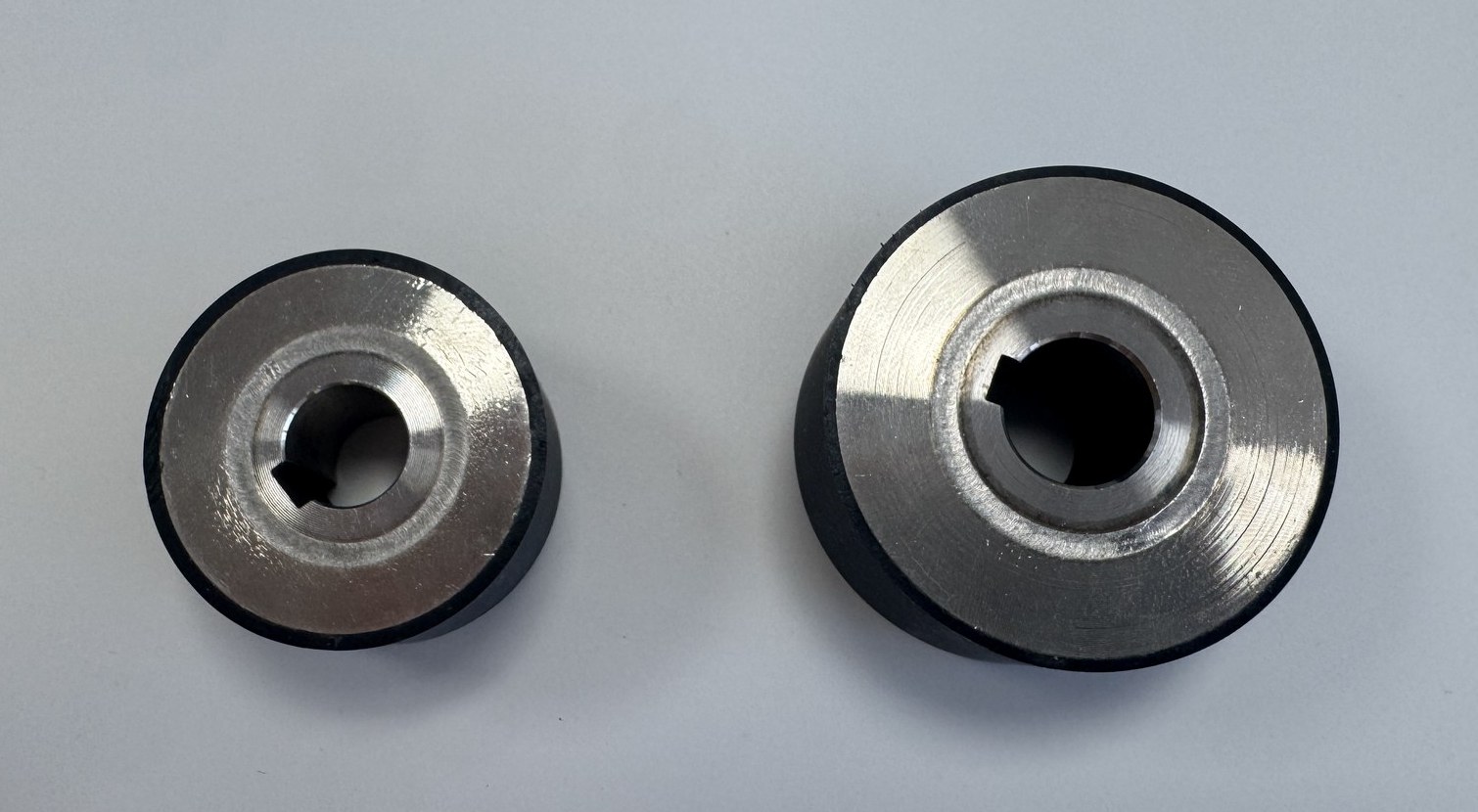
UH at 150°C and a thick cover is one problem. Multi-pass weld heat is another. At that point the magnet conversation shifts toward samarium cobalt (SmCo), and the high-temperature polyurethane cover has to survive the same temperature the magnet does.
We evaluated staying on the TY-W-80R envelope. Pull above 65 kg on that size, under the hotter case, was not a realistic path. Growing the outer diameter to about 100 mm was the way to aim for more than 65 kg at ambient while still talking about high-temperature magnets.
TY-W-100R-250: diameter and width together
The custom that came out of that review is designated TY-W-100R-250: about 100 mm diameter × 90 mm width, SmCo path, target vertical pull ≥630 N (in the same band as the >65 kg ambient ask). The original keyway could stay.
One lesson from the optimization work is easy to understate: increasing diameter alone is not enough. When diameter grows, width has to be optimized with it. A bigger disk with the same thin section is not the same magnetic circuit.
A figure around 630 N at ambient and about 570 N at 250°C (~90%) belongs to the larger TY-W-100R-250, not to an 80 mm SmCo wheel. Do not mix those curves.
The customer also asked for a pull-versus-temperature reference on the earlier covered TY-W-80R, separate from the SmCo custom. That is the right paperwork split. Measured results beat estimates when the two disagree.
Wanting near-TY-W-80R size with more than 65 kg at weld temperature is the hard ask. Geometry and grade both have to move, or the requirement has to.
What we would ask next time
If your climber or crawler will see weld heat, send the temperature with the first drawing, not after the covered batch lands.
- Stock size if you have one (for example TY-W-80 / TY-W-80R), or OD / bore / width / keyway
- Cover thickness and compound (and whether 0.5–1 mm is enough before you ask for 5 mm)
- Vertical pull you need, units and test face if you have them
- Real working temperature (150°C class vs 250°C weld heat; peak vs sustained)
- Whether mass of the wheel is constrained
We ask before we quote. Sometimes the answer is a stock covered wheel. Sometimes it is UH and a thick coat you will regret. Sometimes it is SmCo and a larger envelope. Sometimes the honest answer is that an 80 mm wheel will not carry the hot case you described.
Starting a magnetic-wheel project? Use the contact form (project type: Magnetic Wheels) and send stock sizes, cover thickness, and the real working temperature up front. Stock sizes, covers, and temperature guidance for the whole TY-W family: Magnetic Wheels for Wall-Climbing Robots.