
Standard magnetic wheels we keep in stock, plus the changes people actually ask for: a different size, a rubber cover, a hotter environment, or less mass.
This is custom magnet work, not a parts dump. You send the robot, the steel, and the temperature. We say if a stock wheel will hold, or what has to change.
What a magnetic wheel has to do
A magnetic wheel has to stick to ferromagnetic plate and still roll. Pull that is too low and the robot falls. Pull that is too high and the motor fights the magnet instead of climbing. Rubber that is too thick looks like more grip and is often less pull, because you just added air gap.
We start from a standard round size when we can. Custom is a change to that wheel, not a blank sheet, unless the drawing says otherwise.
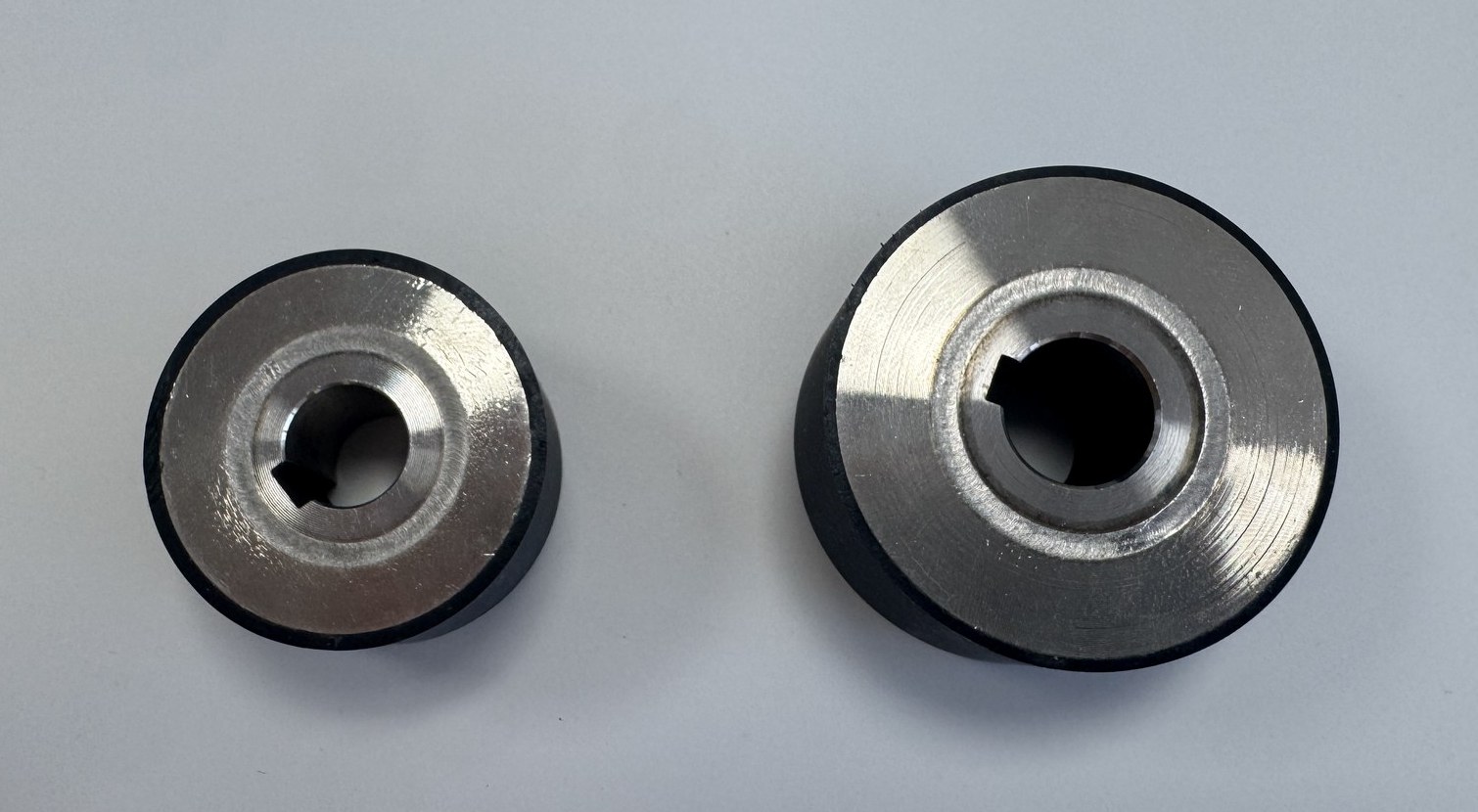
Standard round wheels (in stock)
These are the round sizes we usually have on the shelf. Pull force is the catalog figure and already includes a safety margin.
Orientation values: determined at room temperature on a 10 mm polished S235JR steel plate (DIN 10025). Under normal test conditions the measured force is not lower than the specified value and is usually higher. Installation, temperature, and the counterface can change the result a lot. Ask before you design to the sheet. Conversion used with kg acceptance figures on related jobs: 1 kg ≈ 10 N.
| Part No. | D (mm) | d (mm) | W (mm) | b (mm) | h (mm) | Pull (N) | Weight (kg) |
|---|---|---|---|---|---|---|---|
| TY-W-25 | 25 | 8 | 16 | 3 | 8.6 | 55 | 0.054 |
| TY-W-32 | 32 | 10 | 18 | 4 | 11.1 | 80 | 0.100 |
| TY-W-40 | 40 | 12 | 20 | 4 | 13.1 | 120 | 0.200 |
| TY-W-50 | 50 | 16 | 25 | 5 | 17.3 | 200 | 0.350 |
| TY-W-63 | 63 | 20 | 32 | 6 | 21.7 | 330 | 0.700 |
| TY-W-80 | 80 | 25 | 40 | 8 | 26.7 | 630 | 1.450 |
| TY-W-100 | 100 | 30 | 50 | 8 | 31.7 | 900 | 2.800 |
| TY-W-125 | 125 | 40 | 62 | 12 | 42.1 | 1520 | 5.350 |
| TY-W-160 | 160 | 50 | 80 | 14 | 52.6 | 2940 | 11.40 |
D is outer diameter, d is bore, W is width. b and h match the standard round-wheel drawing.
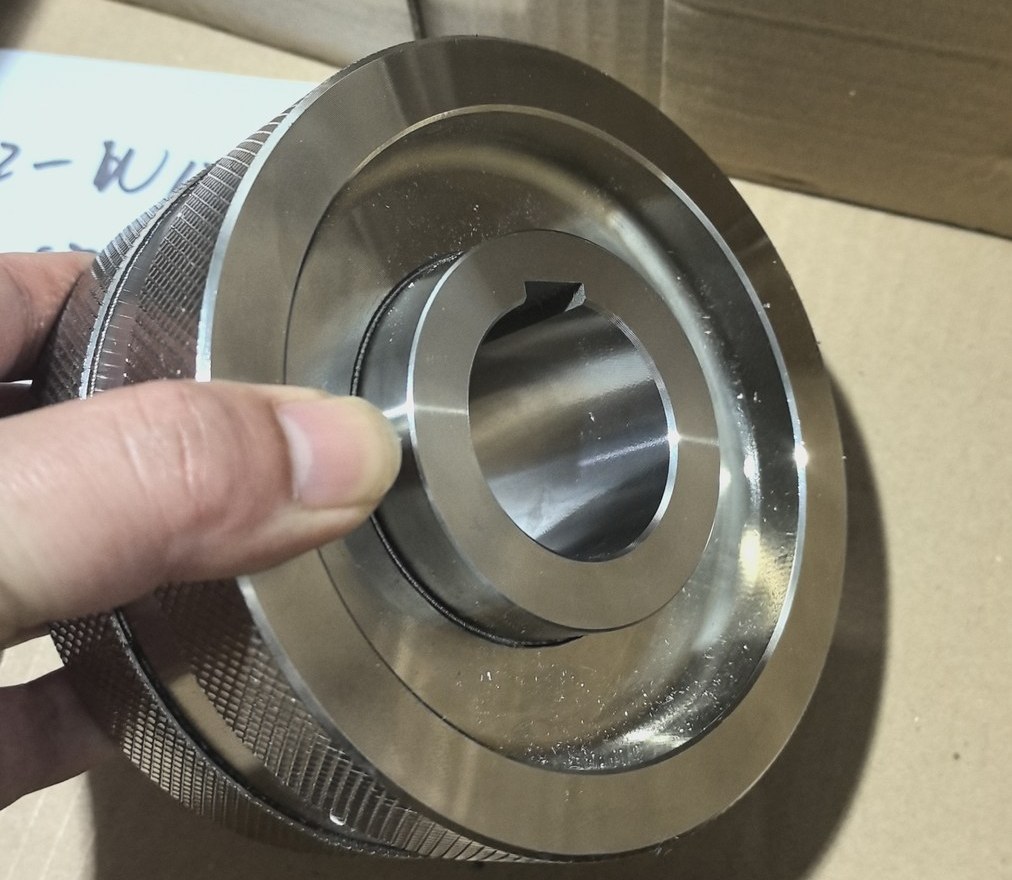
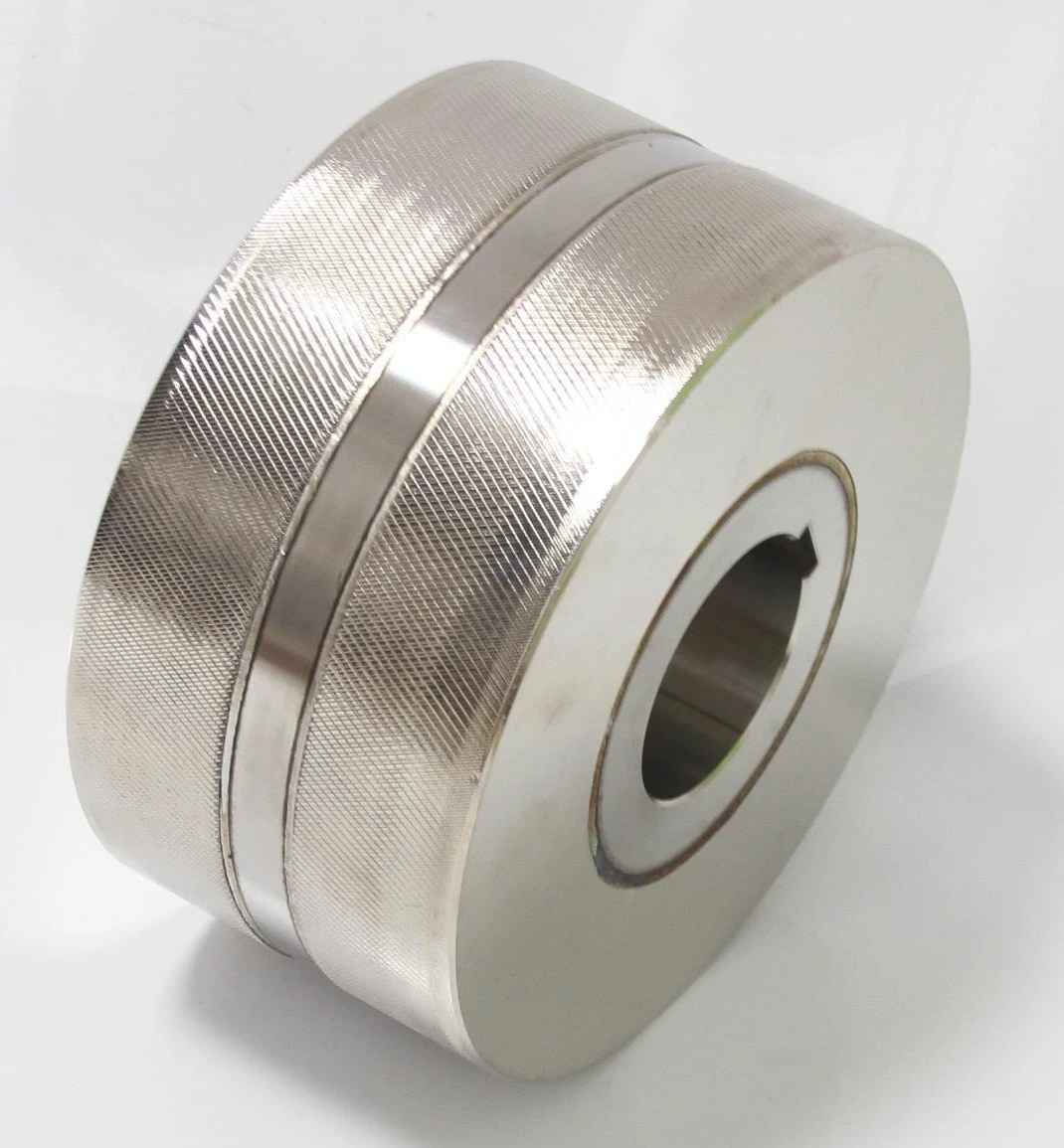
Some wheels use a knurled outer diameter for friction without a rubber cover. Bore and OD can also be customized off the stock table. Rubber is still the path when the surface needs more grip and you accept the air-gap tradeoff.
Arc / curvature wheels exist as a separate family. This page is the round stock list. If that is the geometry, send the drawing.
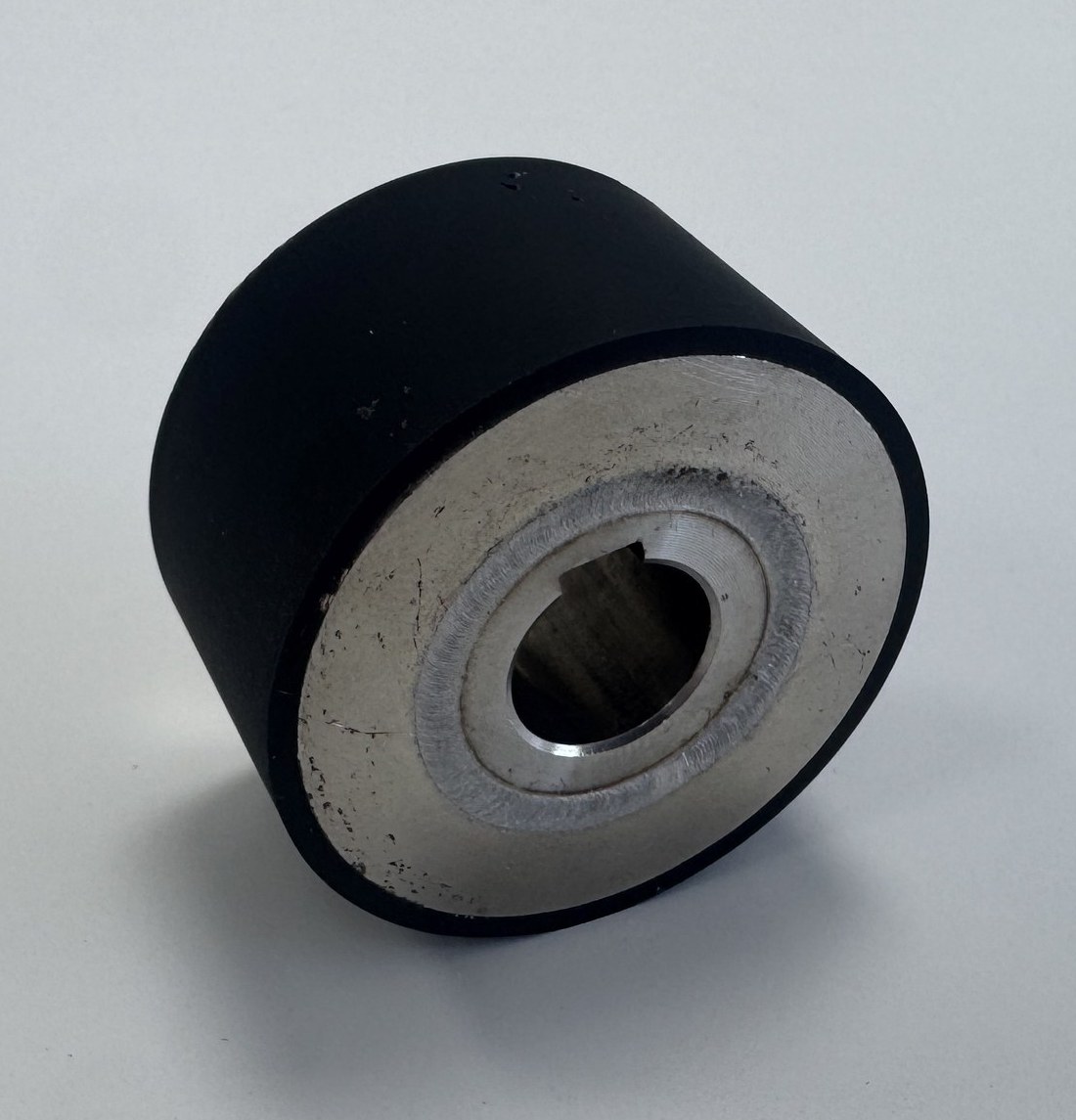
Covers: rubber or PU (0.5–1 mm)
A cover on the outer diameter is extra friction on steel. It is also extra distance between the magnet and the plate. Pull falls off fast as that gap grows. Thicker cover feels safer. Past a point it lifts the magnet off the steel and the wheel holds less, sometimes a lot less.
We can do 0.5 mm. That is usually where we start. We recommend staying in the 0.5–1 mm range unless the job really cannot. Covers are made on request and take about a week. The standard wheel underneath is typically in stock. Covered configurations are often named with an R suffix (for example TY-W-80R).
For wear and grip we often use polyurethane (PU), Shore 80A, rather than older high-temperature rubber coatings. If the environment is hot, the magnet grade and the cover compound are both part of the answer. Do not pick a soft cover and a cold magnet for a weld cell.
Send the surface, not only the wheel. Smooth plate, paint, rust, and a weld seam are different friction problems, and they are different air gaps.
Heat: the magnet, the cover, and the envelope
There is no single published maximum working temperature where we declare a wheel unsafe. We size the magnet, the cover, and often the wheel envelope to the temperature you actually tell us.
If the wheel will see more than 100°C, we use magnets rated to 150°C. Around 200°C, or in multi-pass welding environments, we may switch to samarium cobalt (SmCo). Ordinary rubber on a hot wheel is how people get a cover that hardens, slips, or comes off. When the job still needs friction in that range, use a cover compound that matches (including PU where it fits), not a cold-room tread.
Swapping SmCo into the same small OD is not always enough. Holding force at temperature often means growing diameter and width together. Making the wheel only larger in diameter, with the same thin section, is a common miss.
Example (evaluated custom): TY-W-100R-250 — about 100 mm diameter × 90 mm width, SmCo path, target vertical pull ≥630 N, keyway can match an existing design. A pull figure near 630 N ambient / ~570 N at 250°C belongs to that larger custom, not to an 80 mm SmCo wheel. Ambient orientation pulls use the same plate basis as the catalog table (room temperature, 10 mm polished S235JR). Hot-case figures are estimates for that custom envelope — ask before you design to them.
An N-grade wheel that held on the bench and faded next to a weld is a magnet mistake. A cover that died on the same job is a compound mistake. Send the working temperature with the first drawing, not after the stock wheels land.
For a project walk-through of a high-temperature welding-robot case, see High-Temperature Magnetic Wheels for a Welding Robot. Related capability pages: injection molding with magnets, Halbach rotor manufacturing.
Lightweight versions
If mass actually matters on the robot, we have a lightweight version of these wheels. Made on request, like the rubber cover. It is not the stock wheel with a different label. If weight is a spec, say so up front so we are not quoting the standard stack.
The table is conservative on purpose
The pull numbers above already include a safety margin. Real pull tests usually come out higher.
TY-W-80 is listed at 630 N. In a real-life pull we have seen about 800 N on the same class of polished steel plate test. Design against the table, not against the best pull from the last bench test. The margin is there for air gap, surface condition, and the fact that a catalog number is not a climbing trial.
What to send
Use the contact form. Project type: Magnetic Wheels. NDA on the form if you need it.
- OD, bore, width (or a TY-W size; say if the bore differs from the stock table)
- Robot mass and how many wheels
- The steel: thickness, paint, rust, welds, curvature
- Rubber or PU cover, thickness, hardness if known (we often use PU Shore 80A)
- Real working temperature (peak vs continuous; welding heat if relevant)
- Target vertical pull, short exposure or continuous
- Whether mass of the wheel is a constraint
- Drawings (PDF, DXF, STEP) if you have them
We ask before we quote. If a thick cover or an N-grade magnet will not survive the job, we will say so.
Short answers
- Do you stock magnetic wheels?
- Standard round TY-W sizes, usually yes. Rubber, high-temp magnets or PU, and lightweight versions are on request.
- How thick should the rubber be?
- Start at 0.5 mm. Stay in 0.5–1 mm unless the surface really needs more, and expect pull to drop as the cover gets thicker.
- What if the wheel runs hot?
- Tell us the temperature. Above 100°C we change the magnet rating (150°C class). Around 200°C or in welding heat we may use SmCo, and we may need a larger envelope (diameter and width), not only a grade swap.
- Why is the listed pull lower than a bench test?
- The catalog number has a safety margin. TY-W-80 is 630 N on the sheet and about 800 N in a real pull. Design to the sheet.
- Can you customize bore or keyway?
- Yes. Stock table bores are the default (TY-W-125 stock d = 40 mm). Larger bores and retained keyways are normal custom requests.