
Why Rare Earth Magnets Export Has Become a Project Risk
Rare earth magnets export used to be treated mainly as a purchasing and shipping issue. Buyers compared magnet grade, coating, price, lead time, packaging, and freight route, then expected the project to move forward once the order was confirmed.
That approach is no longer enough for many custom magnet projects. Export feasibility may now depend on magnet material, heavy rare earth content, end use, destination, documentation, and the function of the finished component. A magnet that looks simple on a drawing may still require a deeper review when it involves dysprosium or terbium-containing Neodymium (NdFeB) magnets, Samarium Cobalt (SmCo) magnets, precision assemblies, or applications with possible dual-use concerns.
For this reason, rare earth magnets export should be considered early in the project, not only after production is finished. Once the magnet grade, geometry, coating, magnetization direction, assembly structure, and application route are already fixed, changing the design can become costly or even impractical. Early review helps buyers understand whether the proposed design can be manufactured, documented, shipped, and delivered with acceptable risk.
MagnetPeak is registered in the United States, but many custom rare earth magnet projects still require a practical understanding of China-centered magnet manufacturing, global supply limitations, and export-related documentation. Our role is not to provide legal advice or replace official compliance review. Instead, we help buyers identify project-level risks before sourcing decisions become locked: whether a design depends on sensitive materials, whether a lower-risk magnet route may be possible, and whether the required performance can still be achieved without overcomplicating the supply chain.
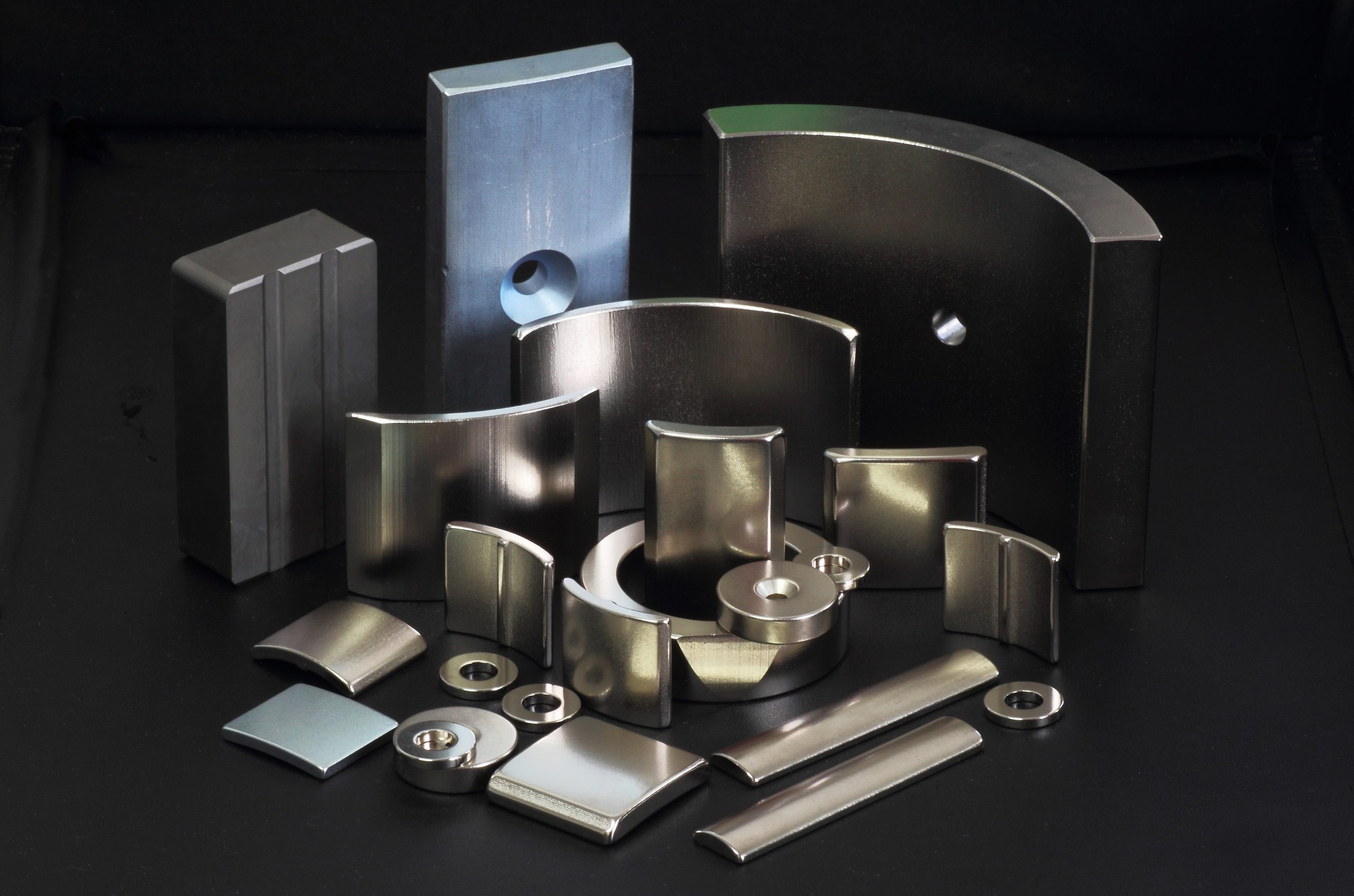
Not All Rare Earth Magnets Face the Same Export Concerns
Rare earth magnets are often discussed as one category, but export-related concerns are not the same for every magnet project. Standard neodymium magnets, dysprosium- or terbium-containing neodymium magnets, samarium cobalt magnets, and precision magnet assemblies may face very different levels of review.
For custom projects, the question is not only whether the magnets can be produced. Buyers also need to understand what material system is involved, whether heavy rare earth elements are used, how the magnets will be applied, and whether the finished component may raise additional documentation or end-use questions.
This is especially important because many custom magnet projects are not standard catalog items. Small changes in grade, temperature requirement, magnetization direction, coating, assembly function, or destination may change the practical sourcing route. A design that looks acceptable from a magnetic performance perspective may still need additional review before it becomes a reliable export project.
| Magnet Type | Export Concern | Project Review Focus |
|---|---|---|
| Neodymium magnets | Neodymium magnets should not be treated as one export-risk category. Dy/Tb-containing Neodymium magnets are within the controlled scope, while neodymium magnets without added dysprosium or terbium may face a different level of review depending on grade, composition, destination, and end use. | Review grade selection, coating, operating temperature, coercivity margin, Dy/Tb content, destination, end use, and whether the design is over-specified. |
| Samarium Cobalt magnets | Samarium Cobalt magnets are within the controlled scope. These magnets are also commonly selected for high-temperature, high-reliability, aerospace, sensor, or other sensitive applications, so project review should be more careful from the beginning. | Review end use, operating temperature, geometry, quantity, documentation needs, lead time, and whether Samarium Cobalt is technically necessary for the project. |
| HRE-free Neodymium magnets | HRE-free Neodymium magnets may help reduce dependence on dysprosium or terbium, but they are not universal replacements for high-coercivity neodymium magnets. Their suitability depends on the actual working condition and demagnetization risk. | Review working temperature, irreversible loss, permeance coefficient, safety margin, magnet geometry, and whether the design can tolerate lower coercivity reserve. |
| GBD neodymium magnets | Grain boundary diffusion may reduce heavy rare earth usage compared with traditional bulk-added routes. However, Dy/Tb-based GBD magnets still contain controlled elements, so lower heavy rare earth consumption does not automatically remove export-related concerns. | Review magnet geometry, diffusion source, Dy/Tb content, coating requirements, coercivity target, production yield, and whether GBD is practical for the required specification. |
| Rare earth magnet assemblies | Export concerns may depend not only on the magnets themselves, but also on the function of the finished component or module. Assemblies using controlled rare earth magnets may require additional review. | Review embedded magnets, assembly structure, magnetic function, application, documentation, destination, and whether the finished part changes the sourcing or export risk. |
The purpose of this table is not to provide a legal classification for every rare earth magnet project. It is a practical screening tool. MagnetPeak does not treat rare earth magnets export as a single checklist, because export feasibility may still depend on composition, destination, end use, documentation, magnetic performance requirements, and the function of the finished component. A practical review starts with the actual project, including magnet material, working temperature, geometry, coating, assembly structure, application, and delivery route. Only after these details are understood can the sourcing route be reviewed in a realistic way.
China Still Matters in Custom Rare Earth Magnet Manufacturing
China remains difficult to replace in custom rare earth magnet manufacturing, especially when projects involve small batches, complex shapes, tight tolerances, special coatings, multipole magnetization, or assembled magnetic components.
This does not mean rare earth magnet capacity outside China is unimportant. New supply chains in the United States, Australia, Europe, Japan, and other regions are becoming increasingly important for strategic industries. These new supply routes are more likely to support projects with clear policy backing, stable volume, standardized specifications, and long-term demand.
However, many custom magnet projects do not fit that model. Buyers may need small quantities, unusual geometries, special grades, thin coatings, tight dimensional control, prototype flexibility, or a combination of magnet machining and assembly work. These requirements are often very different from the needs of large-scale, standardized magnet programs.
For this reason, non-China capacity should not be viewed as a universal shortcut. A realistic sourcing decision still depends on the actual magnet design, quantity, tolerance, coating, magnetization, inspection requirements, delivery schedule, and export feasibility. In many cases, China-centered production experience remains important, even when the buyer wants a more diversified or lower-risk supply route.
MagnetPeak helps buyers review these options at the project level. The goal is not to choose a supply route based on country alone, but to understand whether the design is better suited to existing non-China capacity, China-based custom production, a lower-risk material route, or a staged prototype-to-production plan.
Rare Earth Magnets Export Review: Material, End Use, and Documentation
Rare earth magnets export review should start before a quotation is treated as a normal purchasing request. For custom projects, the key question is not only whether the magnets can be produced, but whether the material choice, technical route, end use, documentation, and delivery plan are realistic together.
The first step is to understand the magnet material and composition. Dy/Tb-containing Neodymium magnets, Samarium Cobalt magnets, HRE-free Neodymium magnets, and GBD Neodymium magnets may lead to different sourcing and export considerations. Even when the drawing only shows dimensions and magnetization direction, the actual grade and composition may change the project risk.
The second step is to review the end use. Magnets used for general holding, sensing, consumer products, industrial equipment, medical devices, aerospace-related systems, or high-temperature mechanisms may require different levels of explanation. In some cases, the same magnet size and grade may be viewed differently depending on where and how the finished product will be used.
Documentation is also part of the project review. Buyers may need to provide drawings, material requirements, destination information, end-use descriptions, application background, or other supporting details before the sourcing route can be evaluated properly. Missing or unclear information can delay the project even when the magnets themselves are technically manufacturable.
MagnetPeak helps buyers organize these questions at an early stage. The goal is not to create unnecessary paperwork, but to avoid locking the project into a material, grade, or assembly route that later becomes difficult to source, document, ship, or replace.
When Design Alternatives Should Be Considered
Design alternatives should be considered when the original magnet specification creates unnecessary sourcing, cost, or export uncertainty. In many custom projects, buyers specify a magnet grade, material, or coating based on habit rather than a full review of working temperature, demagnetization risk, magnetic output, mechanical structure, and delivery requirements.
For Neodymium magnet projects, the first question is whether the design truly needs Dy/Tb-containing material. If the operating temperature, permeance coefficient, and safety margin allow it, HRE-free Neodymium magnets may reduce export-related uncertainty while still meeting the required performance. However, this decision should be based on magnetic and thermal review, not simply on replacing one grade name with another.
For Samarium Cobalt magnet projects, the key question is whether Samarium Cobalt is technically necessary. Samarium Cobalt may be the right choice for high-temperature stability, corrosion resistance, or long-term reliability, but it should still be reviewed against possible non-Samarium Cobalt routes when export certainty is important. In some projects, HRE-free Neodymium magnets, protective coatings, structural changes, improved thermal management, or a different magnetic circuit may be worth reviewing before the material choice is fixed.
For rare earth magnet assemblies, the review may be different from loose magnets. When controlled magnets are exported as part of a finished component, the application, function, and end use of the assembly may sometimes be easier to explain than loose magnet materials alone. However, this should not be treated as an automatic workaround. The embedded magnet material, assembly function, destination, documentation, and end use still need to be reviewed together.
MagnetPeak helps buyers review these alternatives before the design becomes locked. A better route may still use the original material, but the decision should be intentional. For rare earth magnets export, the safest project is often not the one with the strongest magnet on paper, but the one whose material, structure, performance margin, documentation, and sourcing route can work together.
Send Us Your Rare Earth Magnet Project for Review
Rare earth magnets export should be reviewed before the project becomes fixed around one material, one grade, or one supply route. If your project involves neodymium magnets, Dy/Tb-containing NdFeB magnets, samarium cobalt magnets, HRE-free neodymium magnets, GBD neodymium magnets, or rare earth magnet assemblies, early communication can help reduce unnecessary sourcing and delivery uncertainty.
You can send MagnetPeak your drawings, magnet specifications, working temperature, application background, destination, quantity, and any known documentation requirements. If the project is still at an early stage, a concept description is also useful. The more clearly the material, function, and end use are understood, the easier it is to review whether the proposed route is practical.
- Magnet material and grade (NdFeB, SmCo, HRE-free, GBD, or to be confirmed)
- Shape, dimensions, and tolerances
- Magnetization direction and any field requirements
- Coating type
- Working temperature and operating environment
- Assembly structure, if the magnet is part of a finished component
- End use and application background
- Destination country and delivery expectations
- Sample quantity and expected production volume
- Any known documentation or compliance requirements
MagnetPeak does not treat rare earth magnets export as a simple quotation request. Some projects may be straightforward. Some may involve controlled materials and require additional review. Some may be better handled through HRE-free designs, non-SmCo routes, finished assemblies, or changes to the magnetic circuit or mechanical structure.
Our goal is to help buyers understand the realistic path before production starts. A rare earth magnet project should not only work on paper. It should also be manufacturable, documentable, deliverable, and suitable for the intended application.
We routinely review early-stage rare earth magnet projects under NDA. No obligation — just a practical, honest engineering and sourcing assessment.
QUICK FACTS
- Materials reviewed NdFeB, SmCo, HRE-free, GBD
- Controlled elements Dysprosium (Dy), Terbium (Tb)
- Magnet forms Loose magnets & assemblies
- Review focus Material, end use, documentation
- Trade terms DAP / DDP
- First response Within 48 hours