
What Are Parylene Coated Magnets?
Parylene coated magnets are permanent magnets protected by an ultra-thin polymer film deposited through a chemical vapor deposition (CVD) process. Inside the coating chamber, Parylene is delivered as a vapor and forms a conformal film over exposed surfaces, edges, and small features.
Unlike sprayed, dipped, or electroplated coatings, Parylene does not rely on liquid flow or line-of-sight deposition. That makes it useful for small magnets, micro magnetic components, and complex magnet geometries where coating thickness, edge coverage, and dimensional control are critical.
At MagnetPeak, Parylene coated magnets are typically evaluated in the context of micro magnets, medical-related devices, compact sensors, and high-reliability magnetic assemblies. In these projects, surface protection has to be reviewed together with magnet size, tolerance, handling, assembly method, and the final working environment.
Parylene coating can provide a thin, conformal surface barrier — but it should not be treated as a universal protection solution. Actual performance depends on the magnet material, surface condition, coating thickness, adhesion, edge quality, post-coating handling, and the requirements of the finished device.
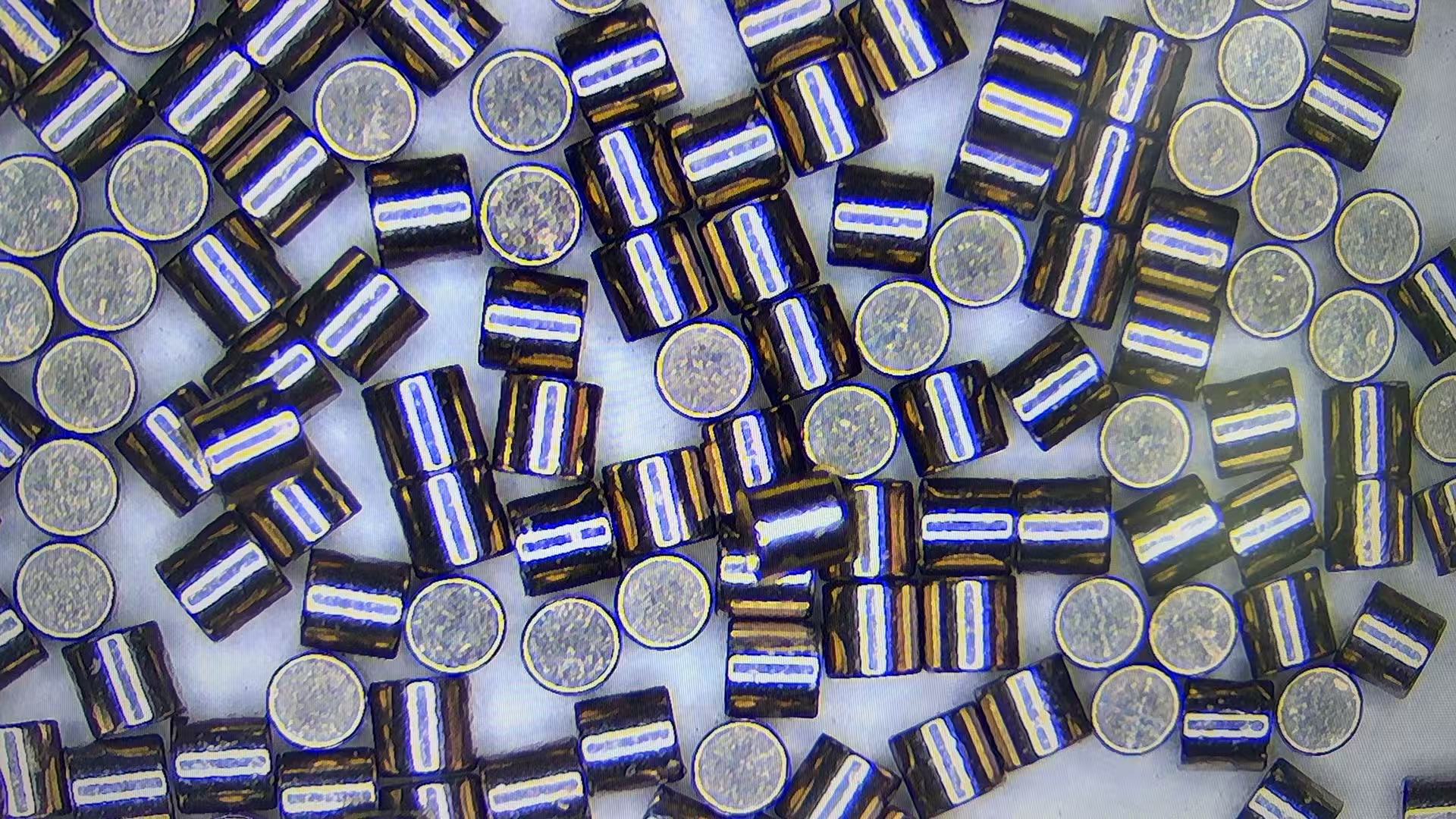
Why Parylene Coating Matters for Micro Magnets
Micro magnets leave very little room for coating mistakes. When magnets are only a few millimeters — or less than one millimeter — in size, coating thickness, edge coverage, and handling damage directly affect the final component.
A coating that works well on larger magnets may become too thick, uneven, or difficult to control on micro magnets. Even a small coating allowance can change the air gap, reduce magnetic interaction, affect sensor response, or create assembly problems.
This is where Parylene becomes useful. Because it is deposited from vapor, Parylene forms a thin, conformal film over small magnets without depending on liquid coating flow or electroplating buildup. That makes it suitable for micro magnets with tight dimensional requirements, small edges, holes, grooves, or complex surfaces.
However, thin does not mean risk-free. Micro magnets may have sharp edges, fragile corners, brittle surfaces, or strong magnetic attraction during handling. For this reason, we treat Parylene coating as part of the micro magnet design — not simply as a finishing option added at the end.
Where Parylene Coated Magnets Are Used
Parylene coated magnets are often considered for applications where small magnet size, thin surface protection, and controlled cleanliness are important. These projects are not limited to corrosion prevention. In many cases, the coating is also tied to surface isolation, particle control, dimensional consistency, or compatibility with sensitive device environments.
Typical use cases include medical-related components, compact sensors, miniature actuators, micro magnetic assemblies, high-reliability electronics, and small devices exposed to humidity, cleaning agents, or chemically challenging environments.
For medical-related projects, Parylene coating should be understood carefully. The coating itself does not automatically qualify magnets for medical use. Suitability still depends on the final device design, contact conditions, sterilization method, exposure duration, mechanical stress, and customer validation requirements.
We don’t treat these projects as simple coating requests. The more important question is whether the magnet material, size, geometry, coating allowance, and final assembly design are suitable for Parylene coating before the project moves into sampling or production.
How Parylene Coating Works on Small Magnets
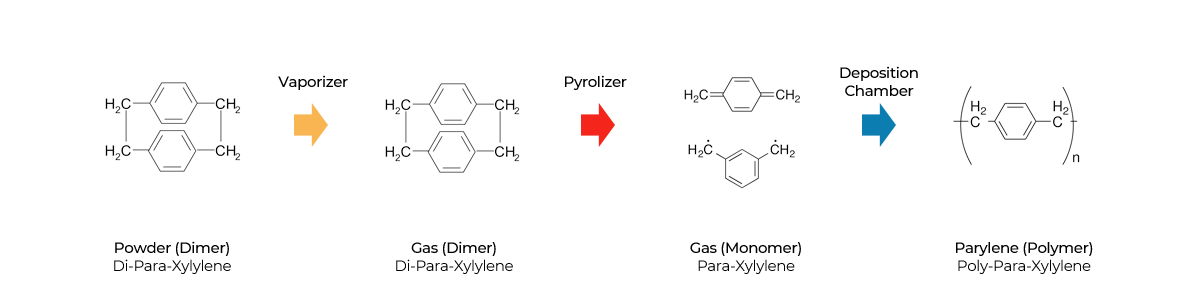
Parylene coating is formed through chemical vapor deposition rather than by spraying, dipping, or electroplating. The Parylene raw material is vaporized, converted into reactive monomers, and deposited as a thin polymer film on the magnet surface inside a coating chamber.
Because the coating is formed from vapor, it can reach small surfaces, edges, holes, grooves, and other exposed areas that may be difficult to cover evenly with liquid coating methods. This is one reason Parylene is often considered for micro magnets and compact magnetic assemblies.
For small magnets, the loading method and fixture design also matter. Magnets may need to be arranged carefully inside the coating chamber to reduce contact marks, shadowed areas, or handling damage. Very small magnets may require special handling before and after coating, because their edges, corners, and surfaces can be easily damaged during transfer, inspection, or assembly.
Surface preparation matters too. Cleaning, surface condition, and adhesion promotion all affect how well the Parylene film remains attached to the magnet. After coating, finished parts may still need inspection for coating thickness, surface defects, adhesion, and dimensional change.
What We Review Before Recommending Parylene Coating
Parylene coating is not recommended only because a project is small, medical-related, or high-end. For micro magnet projects, we review the coating choice together with magnet design, production feasibility, and the final use environment.
Magnet material and surface condition
Neodymium (NdFeB) magnets usually need stronger corrosion protection, especially in humid, saline, or chemically exposed environments. Samarium Cobalt (SmCo) and ferrite magnets may have different concerns, such as surface isolation, cleanliness, chipping, or particle control. Surface roughness, chips, burrs, and edge defects should also be reviewed before coating.
Size, edge quality, and coating allowance
For micro magnets, even a few microns of coating can affect assembly fit, air gap, magnetic interaction, or sensor response. Sharp edges, fragile corners, holes, grooves, and thin walls may also influence coating coverage and durability.
Tolerance and magnetic output
The final coated dimension is often more important than the bare magnet dimension. The effect of coating thickness on working distance, magnetic force, and sensor response should be considered before the magnet size is fixed.
Bonding and assembly method
Parylene can provide a thin conformal barrier, but its surface characteristics may influence adhesive bonding. If the coated magnets need to be glued, inserted, overmolded, or assembled into another structure, the bonding method and assembly sequence should be reviewed early.
Exposure environment and validation requirements
Humidity, saline solution, cleaning agents, body-fluid-like media, temperature, sterilization, and service duration may all influence the coating strategy. For medical-related or high-reliability projects, coating thickness checks, visual inspection, adhesion review, corrosion testing, or customer-specific validation may be required.
In short: Parylene coating is not a simple finishing step for micro magnets. It is part of the design strategy.
Parylene vs. Nickel, Epoxy, Gold, and Encapsulation
Parylene is not the only protection method for magnets. For micro magnets and sensitive magnetic assemblies, the right choice depends on coating thickness, edge coverage, corrosion risk, bonding behavior, dimensional allowance, and the final device structure.
| Protection Method | Main Advantages | Main Limitations |
|---|---|---|
| Nickel plating | Common, economical, and suitable for many standard Neodymium magnets | May not be sufficient as the only barrier in wet, saline, or medical-related environments |
| Epoxy coating | Can offer better corrosion protection than basic nickel plating in some applications | Coating thickness, edge coverage, and dimensional consistency may be harder to control on very small magnets |
| Gold plating | Often considered for medical-related or high-end miniature components | Usually depends on underlayers; defects, pores, and edge quality still need attention |
| Parylene coating | Thin, conformal, and useful for micro magnets, complex shapes, and tight-tolerance assemblies | Higher cost; adhesion, handling, edge quality, and actual exposure conditions must be reviewed carefully |
| Full encapsulation | Provides stronger physical isolation when designed properly | Adds size, increases magnetic distance, and may reduce magnetic output in compact assemblies |
For us, this comparison is not about picking the “best” coating in general. It is about finding a protection method that fits the magnet material, size, tolerance, magnetic output, assembly method, and working environment.
When Parylene Coating Is Not Enough
Parylene coating can be useful for micro magnets, but it should not be selected simply because a project sounds medical, miniature, or high-end. Its thin, conformal structure is valuable, but the real challenge may come from mechanical wear, edge damage, bonding stress, fluid exposure, sterilization conditions, or the structure of the finished device.
If the magnet surface will see sliding contact, repeated friction, impact, or abrasion, Parylene alone may not provide enough long-term protection. If the magnet has sharp edges, fragile corners, small holes, or thin walls, edge quality and coating durability should be reviewed before the coating is specified.
Long-term exposure to saline solution, cleaning agents, body-fluid-like media, or other aggressive environments may also require additional testing, combined coatings, encapsulation, or a design that physically separates the magnet from the exposure environment. In bonded assemblies, the surface characteristics of Parylene may also influence adhesive performance, so bonding tests may be just as important as the coating choice itself.
Parylene coating does not automatically make magnets suitable for medical use. Coated magnets still need to be evaluated within the final device, including contact type, exposure duration, sterilization method, mechanical stress, and customer-specific validation requirements.
That’s why we review Parylene coated magnets as part of a full micro magnet design strategy. If Parylene is suitable, it can be a valuable thin conformal barrier. If it is not enough, alternative coatings, combined protection methods, encapsulation concepts, or changes to magnet geometry and assembly structure should be reviewed.
Send Us Your Parylene Coated Magnet Requirements
We support Parylene coated magnet projects from the magnet side, especially when small size, tight tolerance, magnetic output, and surface protection must be considered together.
To review your project, please share the key requirements as clearly as possible:
- Magnet material and grade
- Shape, dimensions, and tolerances
- Coating type and target thickness
- Edge condition or chamfer requirements
- Magnetization direction
- Required magnetic output or working distance
- Assembly method after coating
- Working environment
- Medical-related contact conditions, if applicable
- Sterilization or cleaning process
- Required tests or customer specifications
- Sample quantity and expected production volume
For early-stage projects, we can also help review whether Parylene coating is the right direction, or whether another coating, encapsulation structure, or magnet material would be a better fit.
For micro magnets, coating should not be separated from design. The best result usually comes from reviewing the magnet, coating, tolerance, magnetic output, and assembly method together — before the design is finalized.
QUICK FACTS
- Coating type Parylene-C / Parylene-F (CVD)
- Typical thickness 0.25 mm to a few microns
- Magnet materials NdFeB, SmCo, Ferrite
- Typical size range sub-millimeter and up
- Custom lead time 5–7 weeks
- Custom MOQ from $1,500