
How can I determine the appropriate grade of neodymium magnet for my new product design?
First, figure out the highest temperature your magnets will face. If they’re going to be used at normal room temperatures, then the N grade magnets are a solid choice. Since there are so many grade options, we generally recommend trying out three different grades to see what works best for your specific needs. So, getting and testing physical samples of different magnet grades like N35, N42, N52 can really help you narrow down the best option for your project.
If your product will be exposed to high temperatures, you’ll want to start by identifying the highest temperature it needs to withstand. For temperatures between 60°C to 100°C, given the variety of available grades, trying out M and H grade magnets in various strengths is a good approach, following our advice to test three grades to find the optimal fit. Similarly, for temperatures ranging from 100°C to 120°C, exploring H and SH grade magnets in different strengths is advisable, considering the numerous grade choices. If you’re looking for more detailed guidance or have other questions, don’t hesitate to reach out to us.
Refer to our article on high-temperature magnets at this link for more information.
How to determine the magnetization direction of a magnet?
A magnetic viewing film is a special type of film that contains tiny magnetic particles suspended in a liquid or a thin film material. When placed near a magnet, these particles align themselves along the magnetic field lines, making the magnetic field visible. By observing the pattern formed by the aligned particles on the film, you can determine the direction and strength of the magnet’s magnetic field, thus identifying its magnetization direction.
Is it possible to coat Samarium-Cobalt with nickel?
Yes, we have the capability and experience in applying nickel plating on the surface of sintered Samarium-Cobalt magnets.
Similar to Neodymium-iron-boron, Samarium-Cobalt also exhibits high electrical conductivity.
Is there a coating type more resistant to rust than nickel plating (Ni-Cu-Ni)?
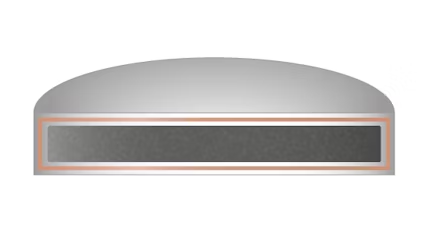
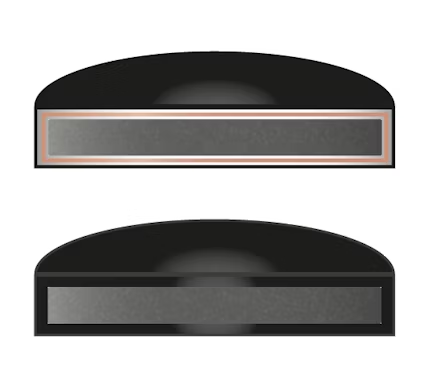
Epoxy coating offers superior corrosion resistance compared to nickel plating. It is an organic coating known for its enhanced corrosion resistance in comparison to many metallic coatings.
A prevalent combination of metallic and organic coatings is Nickel-Copper-Epoxy, initially developed in the offshore wind power industry to safeguard magnets from corrosion in salty and humid environments.
What are ferromagnetic materials?
Ferromagnetic materials are substances that demonstrate robust magnetic properties when exposed to a magnetic field. In simpler terms, they are materials that magnets can attract. These materials have the ability to conduct magnetic flux lines or redirect magnetic field lines.
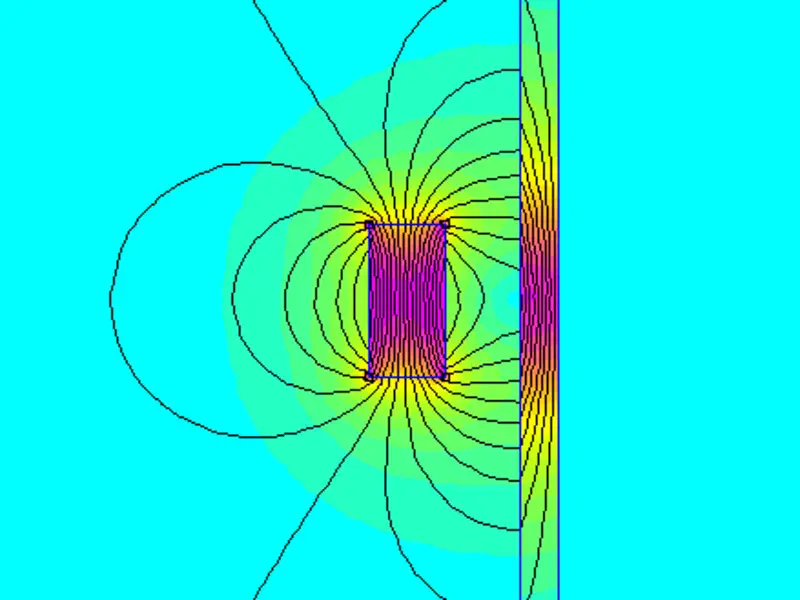
Common examples of ferromagnetic materials comprise iron, nickel, cobalt, and certain alloys derived from them. These materials play vital roles in numerous applications, including electromagnets, electric motors, transformers, and magnetic storage devices such as hard drives.
What are the differences between Nickel and epoxy coating?
Two of the most common coatings for sintered neodymium magnets are nickel (Ni-Cu-Ni) and epoxy. Here are a few differences between two coating options:
- Nickel plating exhibits a silver color, while epoxy coatings typically appear black (although grey and white epoxy is available upon request).
- Nickel plating is the most common coating for neodymium magnets.
- Nickel plating constitutes a metallic coating, whereas epoxy is an organic coating.
- In salt spray tests (SST), magnets coated with epoxy demonstrate longer durability compared to those plated with nickel.
What are the different types of neodymium magnets used in electric motors?
This question is quite broad, but we’ll address it from two perspectives.
Magnet Geometries: Neodymium magnets used in electric motors are available in various shapes, such as segments (arc, bread, block), single solid rings, and wedges or fan shapes for axial flux motors. Solid ring motor magnets can be either radially magnetized or magnetized in a Halbach-like pattern (polar-anisotropic configuration).
Material Types: Neodymium magnets for motors are categorized from strongest to relatively weaker versions as sintered neodymium magnets, hot-pressed neodymium magnets, bonded neodymium magnets, and rubber neodymium magnets. While these are used in different motor types, high-performance motors typically utilize the strongest sintered type.
What does "NiCuNi" mean? Does it refer to a coating with three layers: nickel, copper, and nickel?
An engineer in the semiconductor sector recently inquired about the “NiCuNi” label on our nickel-plated Samarium-Cobalt testing samples.
We applied a three-layer Nickel-Copper-Nickel coating to these samples because they were processed alongside NdFeB magnets, which require robust corrosion protection. Since both the Samarium-Cobalt and NdFeB samples were treated together in the same production line, we used the same coating process for consistency.
The necessity for a triple-layer coating on NdFeB magnets arises from their surface porosity, which demands thorough coverage to prevent corrosion. Therefore, “NiCuNi” serves as a standard practice for nickel plating on NdFeB magnets, ensuring effective corrosion resistance.
MagnetPeak Solutions LLC
What factors can cause permanent magnets to lose their magnetization?
Heat and exposure to strong opposing magnetic fields are the primary factors that can lead to demagnetization.
Heat (High Temperature)
Heat can disrupt the alignment of magnetic domains within the material, causing a permanent magnet to lose its magnetization. When a magnet is exposed to high temperatures, the thermal energy can provide enough kinetic energy to the atoms, allowing them to overcome the magnetic forces that keep them aligned. As a result, the magnetic domains become disordered, leading to a decrease in overall magnetization.
In the case of a permanent magnet motor, when it operates, the rotating magnetic fields generated by the coil winding interact with the permanent magnets housed within it. This interaction induces eddy currents within the magnets, consequently generating resistance within the materials. As a result, a portion of the electrical energy is converted into heat, giving rise to what is known as eddy current loss. This process ultimately leads to the heating of the magnets. If the grade of the magnet is inadequate to withstand the elevated temperatures, there’s a risk that the magnets may experience a partial loss of their magnetism.
External Magnetic Field
Opposing magnetic fields can cause demagnetization of a permanent magnet due to a phenomenon called the reversal of magnetization. When a permanent magnet is subjected to an external magnetic field in the opposite direction of its magnetization, the magnetic domains within the material can begin to align in the direction of the external field, rather than maintaining their original alignment. This can lead to the permanent magnet losing its magnetization, resulting in demagnetization.
One key concept to understand in this context is coercivity (Hcj), which refers to the resistance of a material to becoming demagnetized. Materials with higher coercivity are more resistant to demagnetization, while those with lower coercivity are more easily demagnetized. When an opposing magnetic field is applied to a permanent magnet, it essentially overcomes the coercivity of the material, causing the magnetic domains to reorient and resulting in demagnetization.
To illustrate this, consider an example of a refrigerator magnet. These magnets are typically made from materials with relatively low coercivity, such as ferrite or flexible magnetic sheeting. When a strong opposing magnetic field is applied to a refrigerator magnet, such as placing it near the pole of a strong electromagnet with opposite polarity, the external field can overcome the coercivity of the magnet material. As a result, the magnetic domains within the refrigerator magnet may realign in the direction of the external field, causing it to lose its magnetization and become demagnetized. This can lead to the magnet no longer sticking to the refrigerator or losing its ability to hold paper or other objects.
What is the purpose of encasing magnets in rubber?
The main reason for using a rubber cover on the magnet is to prevent scratching the surface it sticks to. Also, the rubber increases friction, making it less likely for the magnet to slide, especially on painted surfaces.
In other words, compared to magnets with metal coatings, the rubber cover reduces the risk of scratching and slipping.
What is the smallest wall thickness for a micro ring magnet?
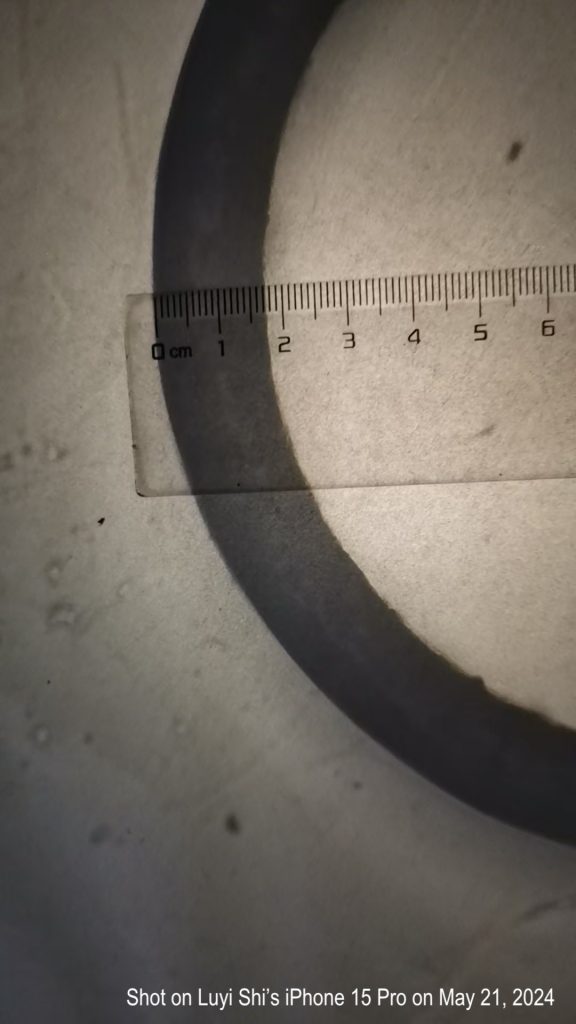
Take the following micro ring magnet as an example: the smallest wall thickness of this magnet is 0.06 mm (0/+0.02 mm).
OD: 1.62 mm
ID: 1.50 mm
Height: 1.50 mm
Of course, a smaller wall thickness will make the micro magnet more expensive. Therefore, we recommend a larger wall thickness of 0.10 mm ±0.01 mm, ±0.02 mm, or ±0.03 mm. The tighter the tolerance, the higher the cost.
This information is for reference for those of you who are looking to design and inquire about micro ring magnets.
What testing procedure do you use to assess the mechanical quality of the motor ring magnet?
Currently, our main focus is on testing the bonding strength between the coating and the NdFeB magnet substrate. This includes shear force tests, tensile tests, PCT tests, etc.
Our physical strength testing is limited because it’s generally destructive testing. Motor ring magnets are high-value-added products, and typically customers don’t require physical strength testing. Therefore, we seldom conduct physical strength tests.
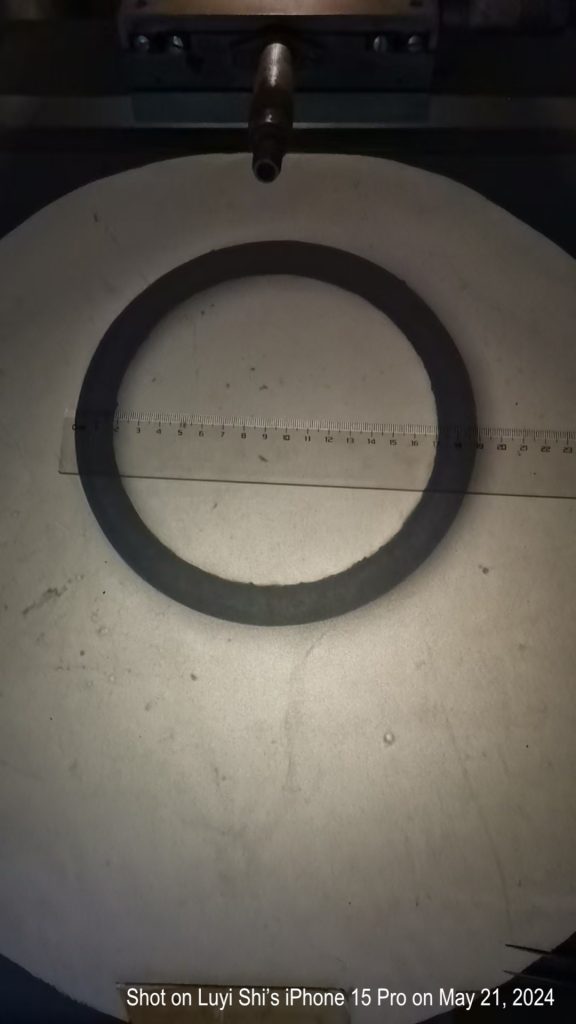
For physical strength testing, we have a very small multipole ring (OD6 mm, ID3 mm, L12 mm), and customers request pressure tests. Three pieces are tested per batch.
The pressure test involves placing the ring magnet on a flat surface, then applying a corresponding pressure head from above at a certain speed until the magnet ruptures. At the moment of rupture, the sensor will read the corresponding value, which will be displayed on the computer screen.
What's the difference between CNC turning and milling?
The key difference between CNC turning and CNC milling lies in the type of operation performed:
- CNC turning involves rotating a workpiece on a lathe while a stationary cutting tool removes material to create cylindrical or conical shapes, such as shafts, rods, and tubes.
- CNC milling involves removing material from a workpiece using rotating cutting tools to create various shapes and features, including flat surfaces, slots, holes, and complex three-dimensional shapes.
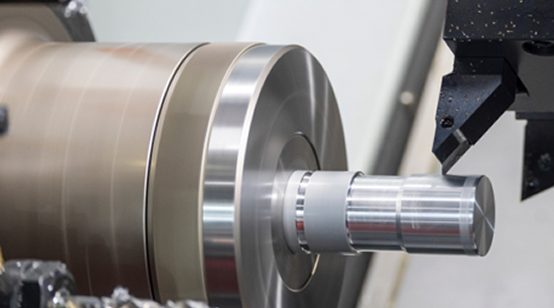
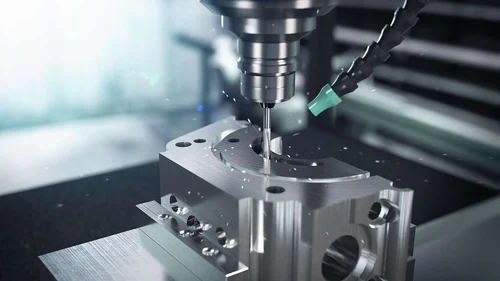
In summary, CNC milling is used for creating a wide range of shapes and features, while CNC turning is primarily used for cylindrical or conical components.
CNC milling is used for creating a wide range of shapes and features, while CNC turning is primarily used for cylindrical or conical components.
MagnetPeak Solutions LLC
Why can't we coat micro magnets for sample batches?
The coating process for micromagnets is not technically feasible due to insufficient quantities. Electroplating occurs within a barrel, necessitating a minimum quantity to initiate the process effectively.
For instance, consider a disc magnet measuring Ø1.00 mm x 0.50 mm. Our experience suggests that to fulfill the quantity criteria for plating, a minimum of 20,000 pieces, collectively weighing 60 grams, is necessary.