
How are the magnets packaged for easy separation during use?
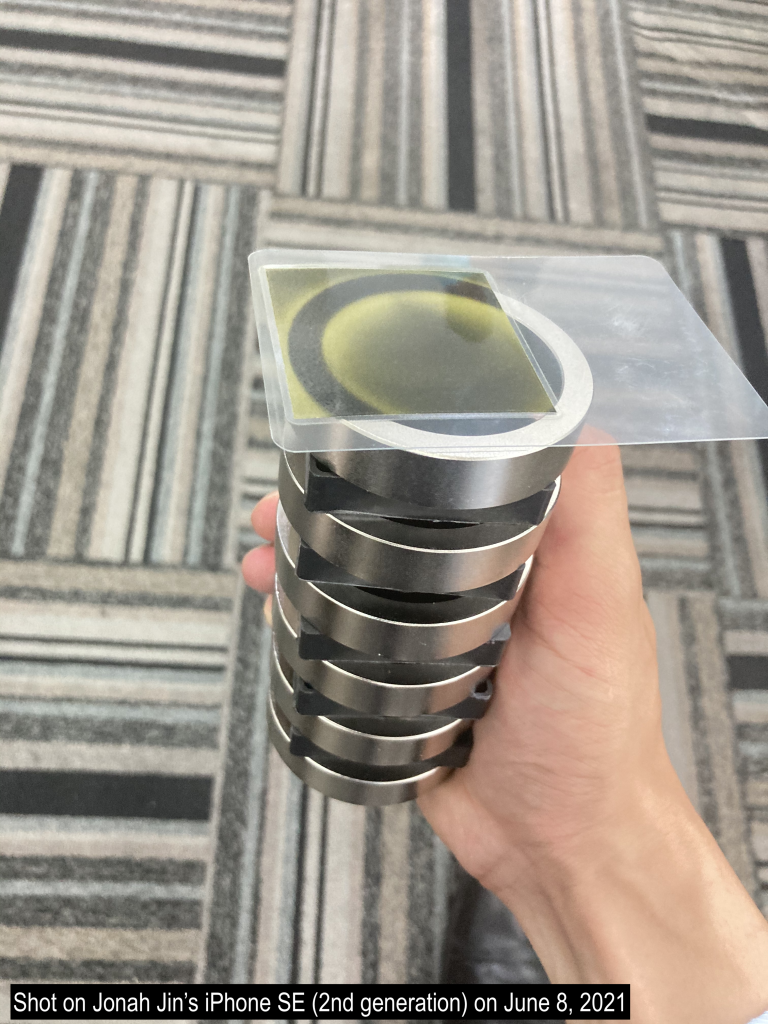
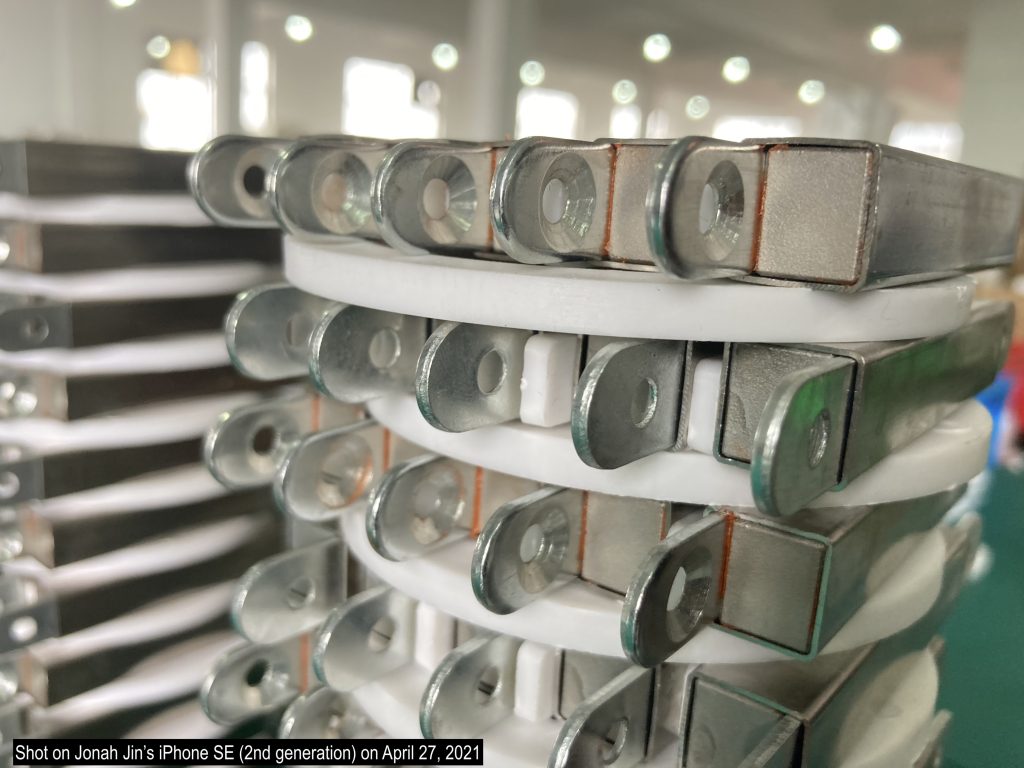
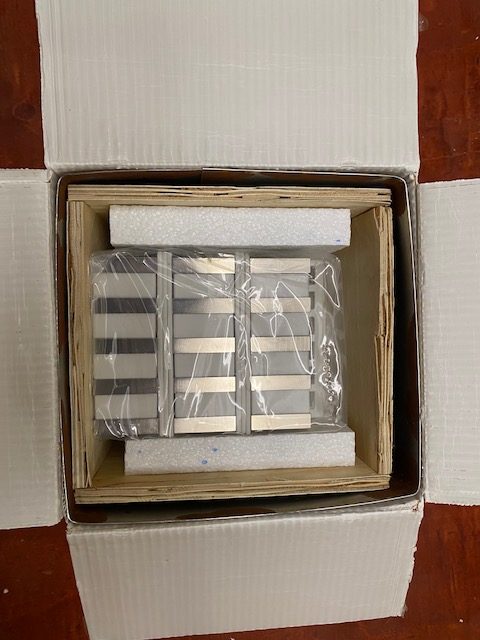
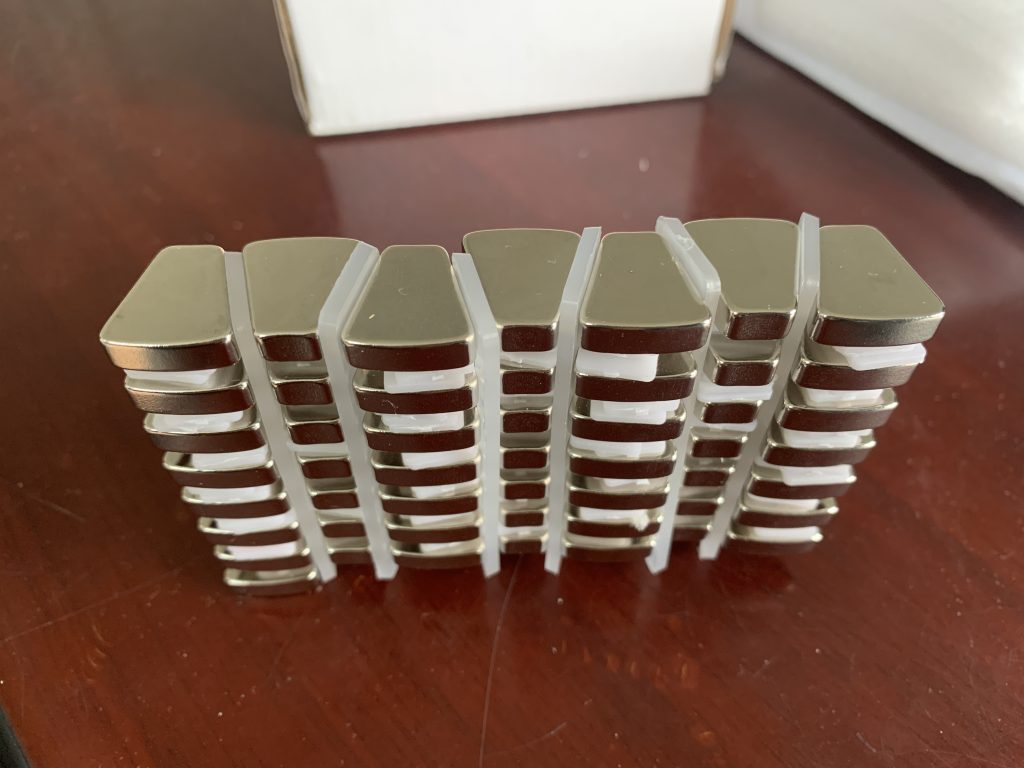
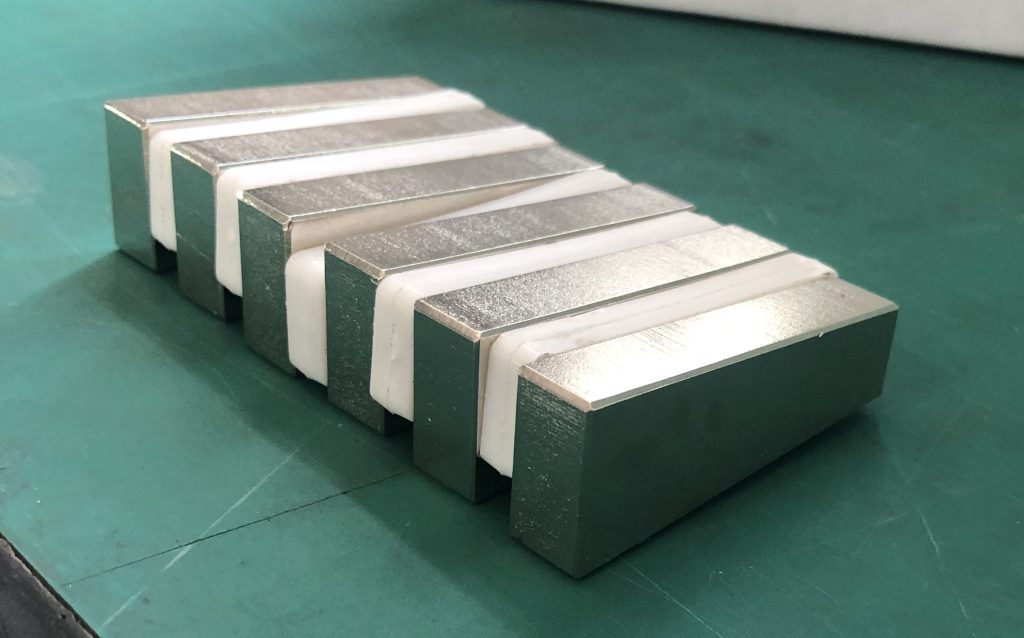
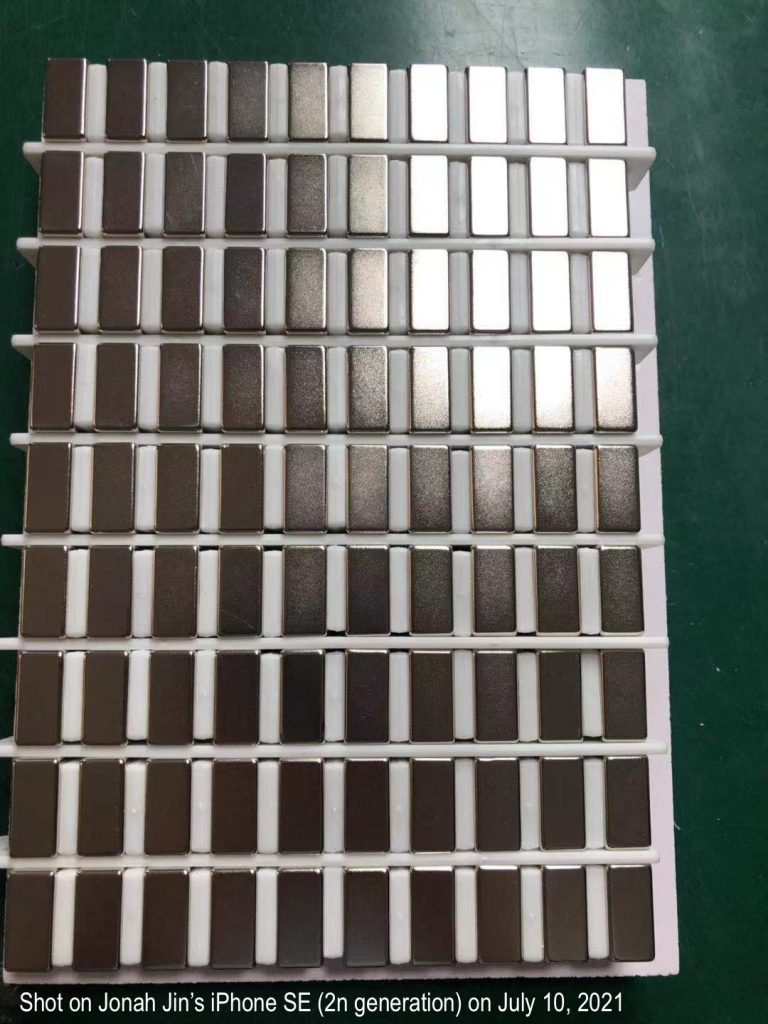
Depending on the size and grade of the magnets, we use either plastic or wooden spacers to facilitate easy separation of the neodymium magnets for the end customer.
What are the differences between Nickel and epoxy coating?
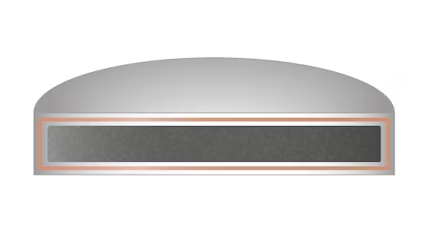
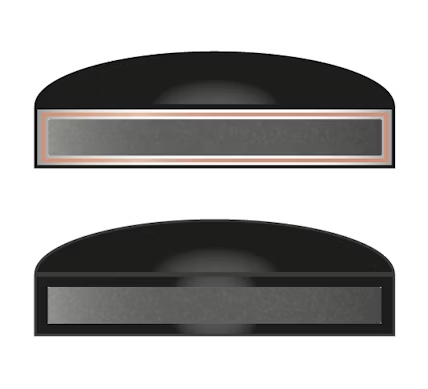
Two of the most common coatings for sintered neodymium magnets are nickel (Ni-Cu-Ni) and epoxy. Here are a few differences between two coating options:
- Nickel plating exhibits a silver color, while epoxy coatings typically appear black (although grey and white epoxy is available upon request).
- Nickel plating is the most common coating for neodymium magnets.
- Nickel plating constitutes a metallic coating, whereas epoxy is an organic coating.
- In salt spray tests (SST), magnets coated with epoxy demonstrate longer durability compared to those plated with nickel.
What is the smallest wall thickness for a micro ring magnet?
Take the following micro ring magnet as an example: the smallest wall thickness of this magnet is 0.06 mm (0/+0.02 mm).
OD: 1.62 mm
ID: 1.50 mm
Height: 1.50 mm
Of course, a smaller wall thickness will make the micro magnet more expensive. Therefore, we recommend a larger wall thickness of 0.10 mm ±0.01 mm, ±0.02 mm, or ±0.03 mm. The tighter the tolerance, the higher the cost.
This information is for reference for those of you who are looking to design and inquire about micro ring magnets.
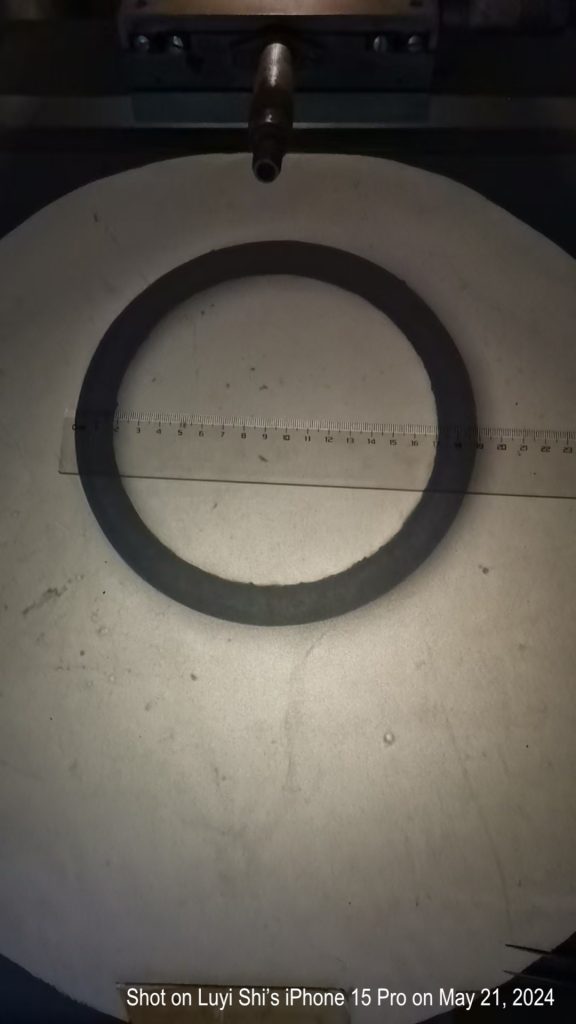
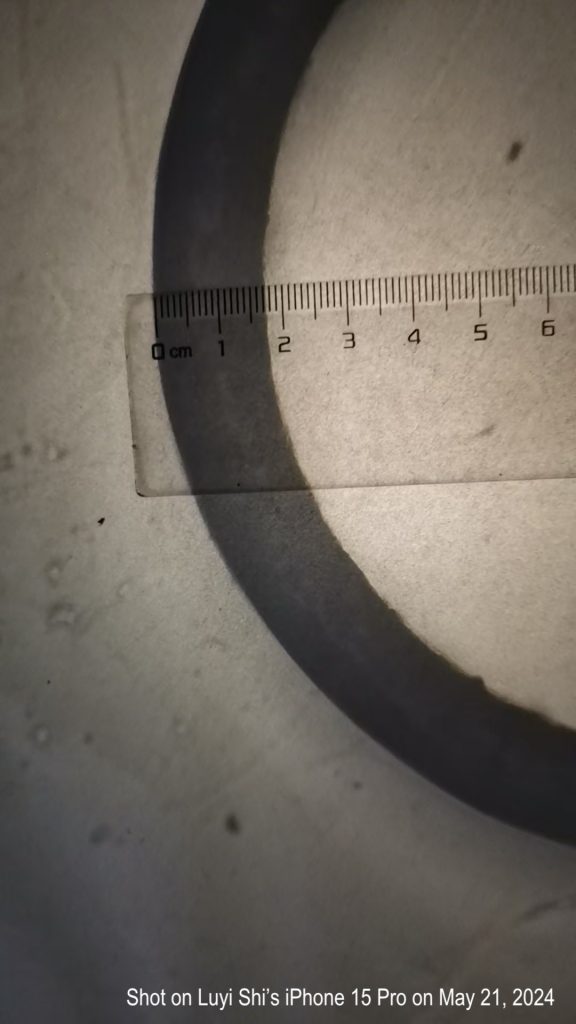
What testing procedure do you use to assess the mechanical quality of the motor ring magnet?
Currently, our main focus is on testing the bonding strength between the coating and the NdFeB magnet substrate. This includes shear force tests, tensile tests, PCT tests, etc.
Our physical strength testing is limited because it’s generally destructive testing. Motor ring magnets are high-value-added products, and typically customers don’t require physical strength testing. Therefore, we seldom conduct physical strength tests.
For physical strength testing, we have a very small multipole ring (OD6 mm, ID3 mm, L12 mm), and customers request pressure tests. Three pieces are tested per batch.
The pressure test involves placing the ring magnet on a flat surface, then applying a corresponding pressure head from above at a certain speed until the magnet ruptures. At the moment of rupture, the sensor will read the corresponding value, which will be displayed on the computer screen.
Why can't we coat micro magnets for sample batches?
The coating process for micromagnets is not technically feasible due to insufficient quantities. Electroplating occurs within a barrel, necessitating a minimum quantity to initiate the process effectively.
For instance, consider a disc magnet measuring Ø1.00 mm x 0.50 mm. Our experience suggests that to fulfill the quantity criteria for plating, a minimum of 20,000 pieces, collectively weighing 60 grams, is necessary.